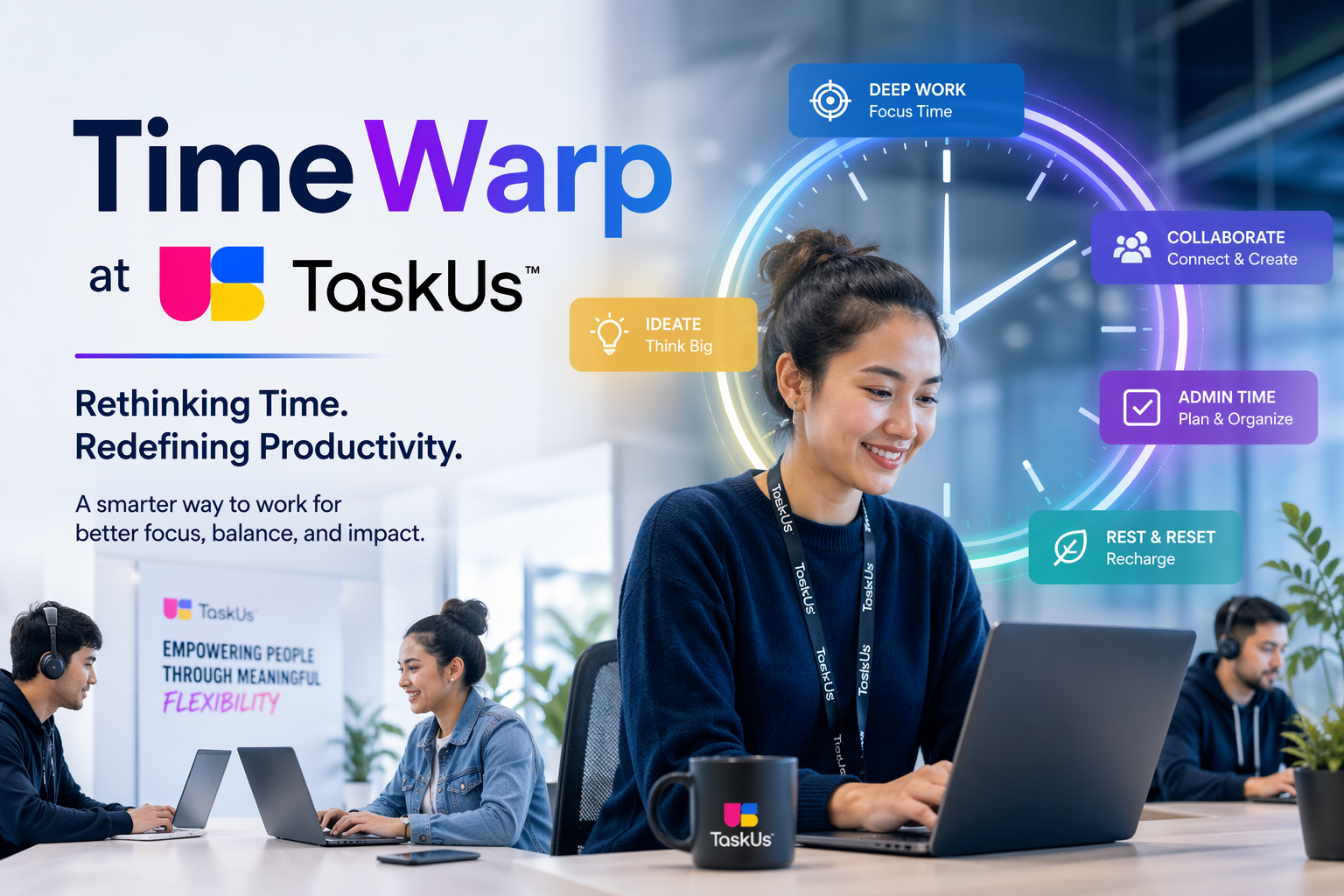
As you know work is increasingly defined by flexibility, digital transformation, and employee well-being, organizations are constantly searching for innovative ways to enhance productivity without sacrificing human connection. One such innovation that has gained attention is TimeWarp, an initiative associated with TaskUs, a global outsourcing company known for its forward-thinking workplace practices. TimeWarp is more than just a productivity tool or scheduling strategy; it represents a broader shift in how companies think about time, efficiency, and employee engagement.
This article explores TimeWarp at TaskUs in depth, examining its origins, underlying philosophy, implementation, impact on employees and business outcomes, and its broader implications for the future of work.
Understanding TaskUs and Its Culture of Innovation
TaskUs has built a reputation as a company that prioritizes employee experience as much as client satisfaction. Operating in the business process outsourcing (BPO) space, the company supports high-growth technology firms with services such as customer support, content moderation, and back-office operations. What distinguishes TaskUs from traditional outsourcing firms is its emphasis on culture, innovation, and employee-centric policies.
Rather than adhering strictly to conventional corporate structures, TaskUs has consistently experimented with new ideas aimed at improving both efficiency and workplace satisfaction. TimeWarp emerges from this culture of experimentation and reflects the company’s willingness to challenge traditional notions of time management.
What Is TimeWarp?
TimeWarp is best understood as a structured approach to optimizing work schedules and workflows by aligning them with human energy cycles and task priorities. Instead of forcing employees into rigid, uniform schedules, TimeWarp allows for a more dynamic allocation of time based on the nature of tasks, individual productivity patterns, and team requirements.
At its core, TimeWarp seeks to answer a fundamental question: What if time at work could be organized in a way that maximizes both output and well-being?
Rather than treating all hours as equal, TimeWarp recognizes that different types of work require different cognitive states. Deep, focused tasks require uninterrupted time blocks, while collaborative or routine tasks can be handled during periods of lower cognitive intensity. By restructuring the workday around these principles, TimeWarp aims to create a more natural and effective workflow.
The Philosophy Behind TimeWarp
The philosophy driving TimeWarp is rooted in several key ideas.
First is the concept that time is not merely a fixed resource but a flexible one that can be shaped to improve outcomes. Traditional work schedules often ignore the variability in human energy and attention. TimeWarp challenges this by encouraging a more intentional use of time.
Second is the belief that productivity is not about working more hours but about working smarter. This involves identifying when employees are most effective and aligning their most important tasks with those periods.
Third is the recognition that employee well-being is directly linked to performance. Burnout, fatigue, and disengagement can significantly reduce productivity, even if employees are technically working the same number of hours. TimeWarp addresses this by incorporating rest, recovery, and flexibility into the work structure.
Finally, TimeWarp reflects a broader shift toward trust-based management. Instead of micromanaging employees’ time, it empowers them to take ownership of their schedules within a structured framework.
How TimeWarp Works in Practice
Implementing TimeWarp involves several key components.
One of the most important elements is the segmentation of the workday into different types of time blocks. These blocks are designed to match the cognitive demands of various tasks. For example, a typical TimeWarp schedule might include periods dedicated to deep work, collaboration, administrative tasks, and rest.
Deep work blocks are reserved for tasks that require high concentration, such as problem-solving, analysis, or creative work. During these periods, distractions are minimized, and employees are encouraged to focus fully on a single task.
Collaboration blocks are used for meetings, team discussions, and other interactive activities. By grouping these activities together, TimeWarp reduces the fragmentation of the workday and allows for more sustained periods of focus.
Administrative blocks are designated for routine tasks such as responding to emails or updating records. These tasks are important but typically require less cognitive effort.
Rest and recovery periods are also built into the schedule. These may include short breaks throughout the day as well as longer periods for relaxation. The goal is to prevent fatigue and maintain consistent performance over time.
Another key aspect of TimeWarp is flexibility. While there is a structured framework, employees have some degree of control over how they allocate their time within that framework. This allows individuals to tailor their schedules to their personal productivity patterns.
Technology also plays a role in supporting TimeWarp. Tools for scheduling, task management, and communication help ensure that workflows remain coordinated even as schedules become more flexible.
Benefits of TimeWarp for Employees
TimeWarp offers several significant benefits for employees.
One of the most notable advantages is improved focus. By creating dedicated periods for deep work, employees can concentrate more effectively and produce higher-quality output. This is particularly important in roles that require critical thinking or creativity.
Another benefit is reduced stress. Traditional work schedules often lead to constant interruptions and a sense of being overwhelmed. TimeWarp helps mitigate this by organizing tasks in a more logical and manageable way.
Work-life balance is also enhanced. The flexibility inherent in TimeWarp allows employees to better align their work schedules with their personal lives. This can lead to increased satisfaction and reduced burnout.
Additionally, TimeWarp fosters a sense of autonomy. When employees have more control over their time, they are more likely to feel trusted and valued. This can improve motivation and engagement.
Finally, the inclusion of rest periods supports overall well-being. Regular breaks and opportunities for recovery help maintain energy levels and prevent fatigue.
Benefits of TimeWarp for Organizations
From an organizational perspective, TimeWarp can lead to several positive outcomes.
One of the most important is increased productivity. By aligning tasks with optimal periods of focus, employees can accomplish more in less time. This can improve overall efficiency and reduce the need for overtime.
Quality of work is also likely to improve. When employees are less distracted and more focused, they are better able to produce accurate and thoughtful results.
Employee retention is another area where TimeWarp can have a significant impact. A flexible and supportive work environment is a key factor in attracting and retaining talent. By offering a more humane approach to work, organizations can reduce turnover and the associated costs.
TimeWarp can also enhance collaboration. By grouping collaborative activities into specific time blocks, teams can communicate more effectively and avoid the constant interruptions that often disrupt workflows.
Finally, TimeWarp supports innovation. When employees have dedicated time for deep thinking, they are more likely to generate new ideas and solutions.
Challenges and Considerations
While TimeWarp offers many benefits, it is not without challenges.
One potential issue is the need for careful planning and coordination. Implementing TimeWarp requires a clear understanding of workflows and task dependencies. Without proper planning, there is a risk of misalignment and inefficiency.
Another challenge is ensuring consistency across teams. In a flexible system, it can be difficult to maintain alignment, especially in large organizations. Clear guidelines and effective communication are essential.
There is also the question of adaptability. Not all roles or industries may be well-suited to TimeWarp. For example, jobs that require constant availability or real-time responses may have limited flexibility.
Employee training is another important consideration. Transitioning to a new way of working requires a shift in mindset as well as new skills in time management and self-organization.
Finally, there may be resistance to change. Some employees and managers may be accustomed to traditional schedules and may be hesitant to adopt a new approach.
TimeWarp and Remote Work
The rise of remote work has made initiatives like TimeWarp even more relevant.
In a remote environment, traditional boundaries between work and personal life are often blurred. TimeWarp provides a structured yet flexible framework that can help employees manage their time more effectively.
Remote work also highlights the importance of trust and autonomy. Without direct supervision, employees need to be able to manage their own schedules. TimeWarp supports this by giving individuals more control while maintaining overall coordination.
Communication is another critical factor in remote work. By organizing collaborative activities into specific time blocks, TimeWarp can improve the efficiency and effectiveness of virtual interactions.
Additionally, remote work often involves working across different time zones. TimeWarp’s flexibility can help accommodate these differences and facilitate global collaboration.
Measuring the Impact of TimeWarp
To assess the effectiveness of TimeWarp, organizations need to track various metrics.
Productivity metrics can provide insights into whether employees are able to accomplish more within the same amount of time. This may include measures such as task completion rates, output quality, and efficiency.
Employee engagement surveys can help gauge how employees feel about the new system. Factors such as satisfaction, motivation, and stress levels are important indicators of success.
Retention rates can also provide valuable information. A decrease in turnover may suggest that employees are benefiting from the new approach.
Performance metrics specific to each role or department can offer more detailed insights. For example, customer satisfaction scores in a support role or project completion times in a development team.
Finally, qualitative feedback is essential. Conversations with employees can reveal insights that may not be captured by quantitative data.
Broader Implications for the Future of Work
TimeWarp reflects a broader trend toward rethinking how work is organized.
As technology continues to evolve, the traditional nine-to-five workday is becoming less relevant. Flexible schedules, remote work, and digital collaboration tools are reshaping the workplace.
In this context, initiatives like TimeWarp represent a shift toward a more human-centered approach to work. Instead of forcing employees to adapt to rigid systems, organizations are designing systems that adapt to human needs.
This shift has important implications for leadership. Managers need to focus less on monitoring time and more on supporting outcomes. This requires a different set of skills, including communication, trust-building, and strategic thinking.
It also has implications for organizational design. Companies may need to rethink their structures and processes to support more flexible and dynamic ways of working.
Education and training will also play a role. As work becomes more flexible, individuals need to develop skills in self-management, prioritization, and adaptability.
Case Examples and Hypothetical Scenarios
To better understand how TimeWarp might function in practice, consider a hypothetical customer support team.
In a traditional setup, agents might work fixed shifts with a constant flow of tasks. This can lead to fatigue and reduced performance over time.
With TimeWarp, the day could be structured into different segments. High-volume support periods could be balanced with lower-intensity tasks and scheduled breaks. Agents could also have dedicated time for training or process improvement.
In a creative or technical team, TimeWarp might involve long, uninterrupted periods for deep work, followed by shorter collaboration sessions. This could enhance both individual productivity and team coordination.
These examples illustrate how TimeWarp can be adapted to different contexts while maintaining its core principles.
The Role of Leadership in TimeWarp
Leadership plays a critical role in the success of TimeWarp.
Leaders need to set clear expectations and provide guidance on how the system should be used. At the same time, they need to allow for flexibility and experimentation.
Communication is essential. Employees need to understand the purpose of TimeWarp and how it benefits them. Regular feedback and open dialogue can help address concerns and improve the system.
Leaders also need to model the desired behavior. By adopting TimeWarp principles themselves, they can demonstrate their commitment and encourage others to follow.
Finally, leaders need to be willing to adapt. TimeWarp is not a one-size-fits-all solution, and it may need to be adjusted based on feedback and changing circumstances.
Conclusion
TimeWarp at TaskUs represents a significant step forward in the evolution of workplace practices. By rethinking how time is structured and utilized, it offers a more effective and humane approach to productivity.
The initiative highlights the importance of aligning work with human capabilities and needs. It demonstrates that productivity and well-being are not mutually exclusive but can be mutually reinforcing.
While there are challenges to implementing TimeWarp, the potential benefits for both employees and organizations are substantial. As the nature of work continues to evolve, approaches like TimeWarp are likely to become increasingly relevant.
Ultimately, TimeWarp is not just about managing time more efficiently; it is about redefining what work can be in a modern, dynamic world.