The digital world has witnessed a growing number of data breaches and cybersecurity incidents in recent years, but few have generated as much discussion in technical communities as the thejavasea.me leaks aio-tlp370. What initially appeared to be a minor leak shared within niche developer circles quickly escalated into a major event, drawing attention from cybersecurity experts, developers, and organizations across multiple industries.
This incident is not just about leaked files or exposed systems. It represents a deeper issue within modern software ecosystems, where interconnected tools, cloud infrastructure, and automated systems create both opportunities and vulnerabilities. The thejavasea.me leaks aio-tlp370 case highlights how a single breach can ripple across organizations, exposing weaknesses in security practices and forcing businesses to reassess their digital defenses.
Understanding AIO-TLP370
At the center of the incident is AIO-TLP370, a sophisticated software system designed for enterprise-level log processing and monitoring. The term AIO-TLP stands for All-In-One Transparent Log Processor, which reflects its core functionality. It is a platform built to collect, process, and analyze logs from various sources within an organization.
Logs are essential in modern IT environments. They provide insights into system performance, user activity, and potential security threats. AIO-TLP370 was developed to unify these logs into a single, manageable pipeline, allowing organizations to monitor their systems efficiently.
The system functions as a centralized hub that gathers data from applications, servers, and networks. It processes this information in real time, enabling organizations to detect anomalies, generate alerts, and maintain compliance with data protection regulations. In many ways, it acts as the backbone of an organization’s monitoring infrastructure.
Before the leak, AIO-TLP370 was considered a powerful tool within specialized DevOps and cybersecurity communities. Its ability to integrate multiple data sources and provide actionable insights made it a valuable asset for organizations seeking advanced monitoring capabilities.
Key Features of AIO-TLP370
AIO-TLP370 gained attention due to its advanced features, which were designed to address the complexities of modern IT environments.
One of its most important capabilities is consolidated log processing. Instead of managing logs from different systems separately, the platform brings them together into a unified stream. This eliminates fragmentation and allows for more efficient analysis.
Another notable feature is real-time alerting. The system can detect unusual patterns or potential issues and immediately notify users through various communication channels. This enables quick responses to potential threats or system failures.
The platform also supports integration with popular data tools and services. By connecting with analytics platforms and monitoring systems, AIO-TLP370 enhances its functionality and provides a more comprehensive view of organizational data.
Data privacy is another critical aspect. The system includes mechanisms for anonymizing sensitive information, ensuring compliance with regulations and protecting user data.
These features made AIO-TLP370 a highly regarded tool among developers and organizations. However, the same capabilities that made it powerful also made it a high-value target for attackers.
The Emergence of thejavasea.me Leaks AIO-TLP370
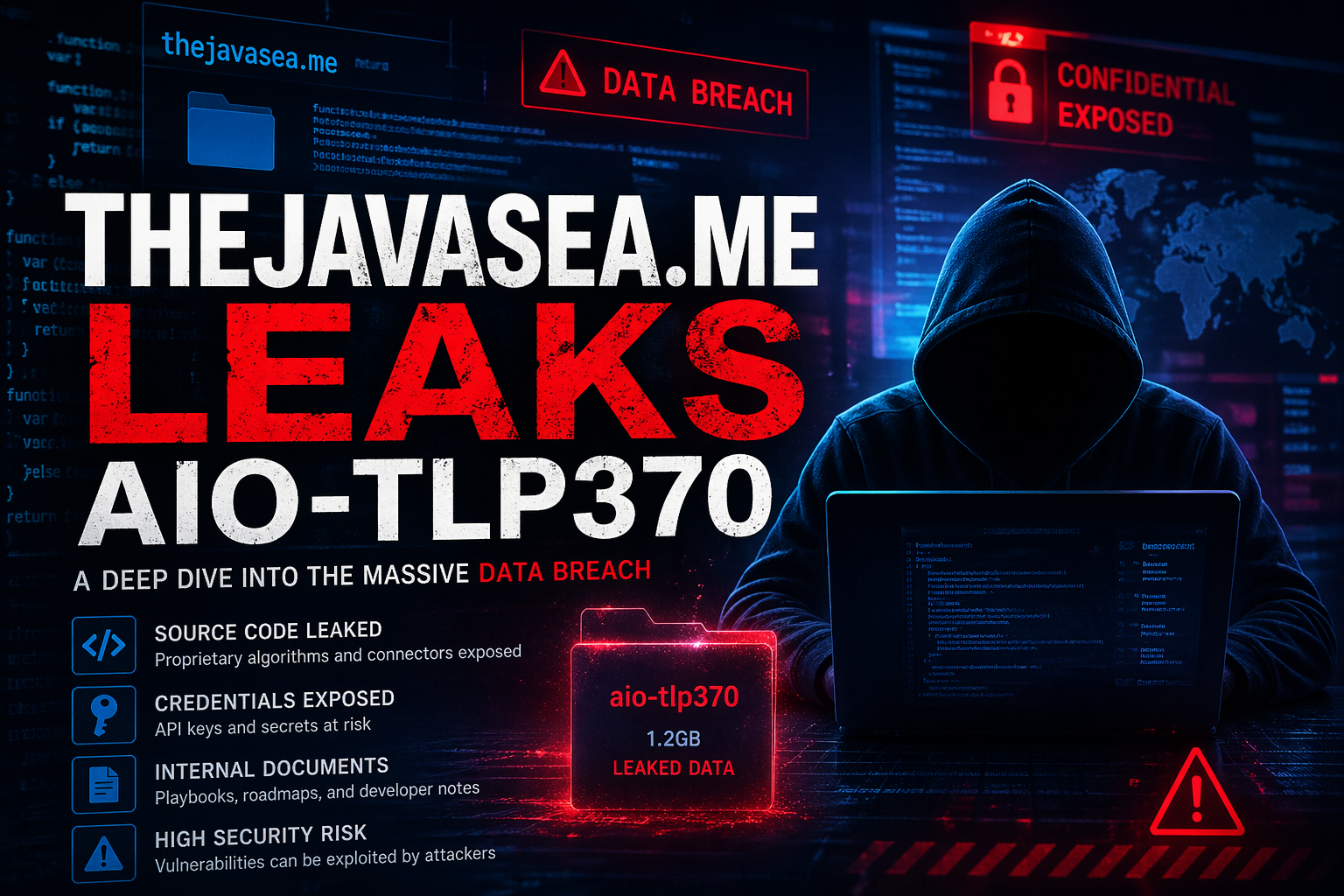
The thejavasea.me leaks aio-tlp370 incident began when a large archive of data was released online. The leak reportedly contained over one gigabyte of sensitive information, including source code, configuration files, and internal documentation.
The data was initially shared on obscure platforms but quickly spread to more widely used forums and discussion channels. Within hours, cybersecurity researchers began analyzing the files, confirming their authenticity and identifying potential risks.
The leak included detailed information about the inner workings of AIO-TLP370. This provided unprecedented insight into the system’s architecture, features, and vulnerabilities. While such transparency can sometimes benefit developers, in this case, it posed significant security risks.
What Was Exposed in the Leak
The thejavasea.me leaks aio-tlp370 revealed several categories of sensitive information.
One of the most concerning elements was the source code. This included the algorithms and logic that power the platform. Access to source code allows attackers to study the system in detail and identify weaknesses that can be exploited.
Configuration files were also exposed. These files often contain critical information such as API keys, access tokens, and system settings. If these credentials are not properly secured, they can be used to gain unauthorized access to systems.
The leak also included developer notes and internal documentation. These materials provided insights into the design decisions, planned features, and known issues within the platform. Such information can help attackers understand how to bypass security measures.
In addition, the archive contained operational playbooks and procedures. These documents outlined how the system is managed and how incidents are handled. While useful for legitimate users, they can also be used by malicious actors to plan attacks.
Why the Leak Is Significant
The thejavasea.me leaks aio-tlp370 incident is significant for several reasons.
First, it exposes vulnerabilities in a widely used system. Organizations that rely on AIO-TLP370 may now be at risk if attackers use the leaked information to exploit weaknesses.
Second, the leak highlights the importance of securing sensitive data. Even advanced systems can become liabilities if their internal information is exposed.
Third, it demonstrates the interconnected nature of modern technology. A breach in one system can affect multiple organizations, especially when shared tools and platforms are involved.
Finally, the incident underscores the need for proactive cybersecurity measures. Waiting for a breach to occur is no longer an option. Organizations must continuously monitor and improve their defenses.
Possible Origins of the Leak
The exact source of the thejavasea.me leaks aio-tlp370 remains unclear. However, several theories have been proposed.
One possibility is an insider leak. An individual with access to the system may have intentionally released the data, either for personal reasons or financial gain.
Another possibility is a cyberattack. Attackers may have infiltrated a system and extracted the data before making it public.
A third theory involves supply chain vulnerabilities. The data could have been obtained through a third-party vendor or partner with weaker security measures.
Regardless of the source, the incident highlights the complexity of modern cybersecurity challenges. Protecting a system requires not only securing internal resources but also ensuring that external partners maintain strong security practices.
Impact on Businesses and Developers
The thejavasea.me leaks aio-tlp370 has had a significant impact on businesses and developers.
Organizations that use AIO-TLP370 may need to conduct thorough security audits. This involves reviewing systems for potential vulnerabilities and ensuring that no unauthorized access has occurred.
Developers may need to update and patch the software to address the issues revealed by the leak. This can be a time-consuming process, especially for complex systems.
The incident also affects trust. Customers and clients may question the security of systems and services, leading to reputational damage for affected organizations.
In some cases, businesses may face financial losses due to the cost of remediation, legal implications, and potential disruptions to operations.
How Organizations Should Respond
In response to the thejavasea.me leaks aio-tlp370, organizations should take immediate action to protect their systems.
The first step is to conduct a comprehensive audit. This involves identifying any exposed credentials, reviewing system logs, and checking for unusual activity.
Next, organizations should update and rotate all credentials. This includes API keys, passwords, and access tokens. Ensuring that these credentials are secure is critical to preventing unauthorized access.
Applying patches and updates is another essential step. Developers may release fixes to address vulnerabilities, and organizations should implement these updates as soon as possible.
Strengthening network security is also important. This may involve implementing stricter access controls, using encryption, and adopting a zero-trust approach.
Finally, organizations should review their incident response plans. Being prepared for potential breaches can reduce the impact and ensure a quicker recovery.
Lessons in Cybersecurity and Supply Chain Risk
The thejavasea.me leaks aio-tlp370 provides valuable lessons for organizations.
One key lesson is the importance of securing the software supply chain. Organizations often rely on third-party tools and services, which can introduce vulnerabilities if not properly managed.
Another lesson is the need for continuous monitoring. Cyber threats are constantly evolving, and organizations must stay vigilant to detect and respond to new risks.
Collaboration is also crucial. Sharing information about threats and vulnerabilities can help organizations improve their defenses and prevent similar incidents.
Finally, the incident highlights the importance of balancing innovation with security. While new technologies offer many benefits, they must be implemented with careful consideration of potential risks.
The Future After thejavasea.me Leaks AIO-TLP370
The long-term impact of the thejavasea.me leaks aio-tlp370 will likely shape how organizations approach cybersecurity.
There may be increased emphasis on secure development practices, including code reviews and vulnerability testing. Organizations may also invest more in advanced security technologies such as encryption and threat detection systems.
Regulatory frameworks may evolve to address the growing risks associated with data breaches. This could lead to stricter requirements for data protection and security practices.
At the same time, the incident may encourage greater transparency within the tech community. Sharing knowledge about vulnerabilities can help improve security across the industry.
Conclusion
The thejavasea.me leaks aio-tlp370 is more than just a data breach. It is a reminder of the complex challenges that come with modern technology. As systems become more advanced and interconnected, the potential impact of a single vulnerability increases.
This incident highlights the importance of proactive cybersecurity measures, strong supply chain management, and continuous vigilance. Organizations must take responsibility for protecting their systems and data, not only for their own benefit but for the broader digital ecosystem.
Ultimately, the lessons learned from the thejavasea.me leaks aio-tlp370 can help drive improvements in security practices and encourage a more resilient approach to technology.